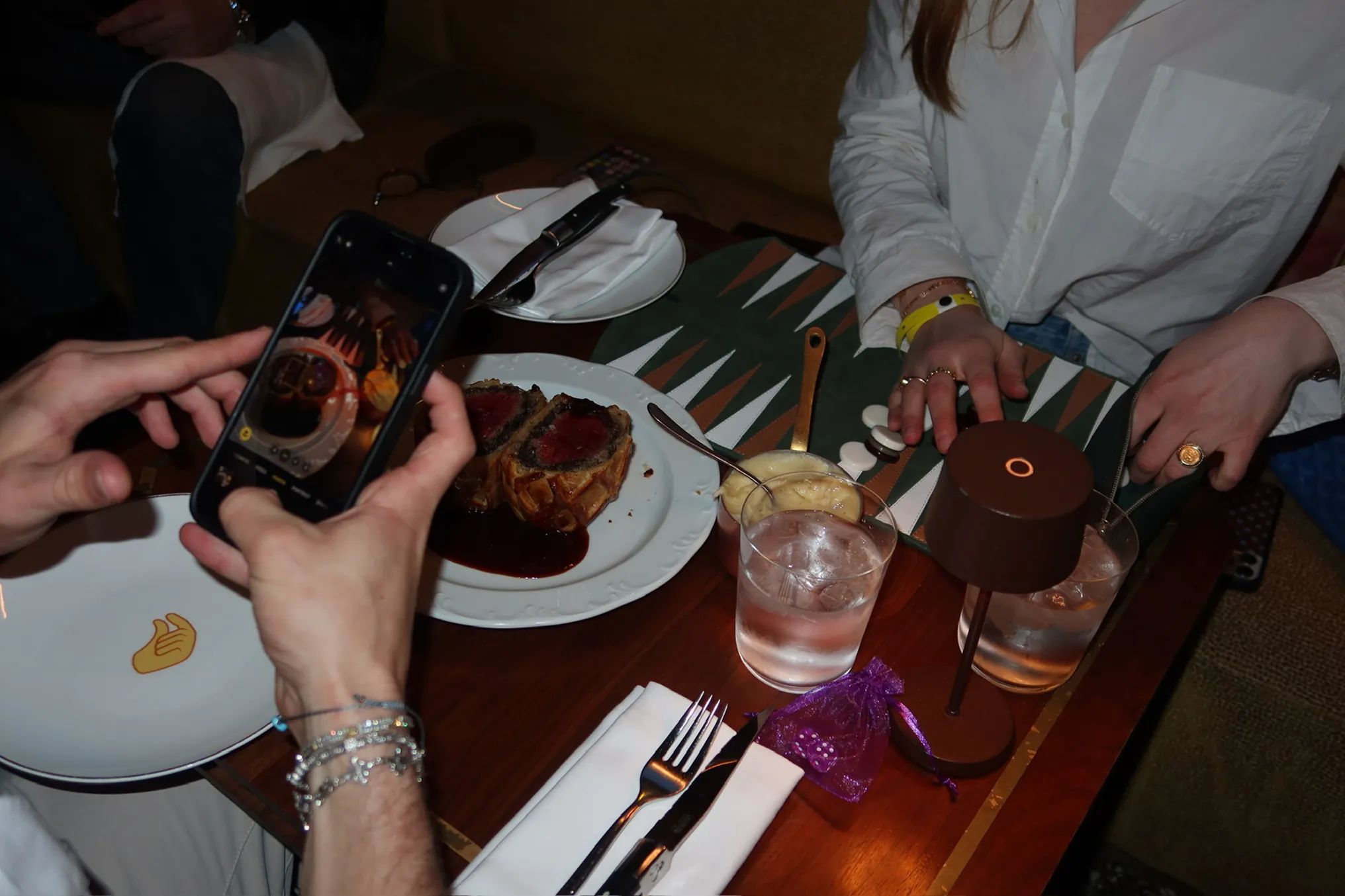
A food influencer is a creator whose followers come to them for food and drink: where to eat, what to cook, what to buy. For a restaurant, cafe, bakery or food brand, the useful ones are rarely the famous names on top-100 lists. They are smaller creators whose followers live near you, and some barely post about food. This Storytime guide covers which ones to work with by size and city, what they charge and how to find them.
What is a food influencer?
A food influencer posts about food or drink often enough that their followers expect it. Some run “where to eat” accounts about one city’s restaurants. Some post recipes and home cooking. Others review packaged food and drinks from the supermarket, or stick to coffee, bakeries or dessert.
The audience makes someone a food influencer, not one photo of lunch. For a business that label matters less than you might think. Plenty of creators who post a meal now and then aren’t food influencers at all, and as two New York case studies below show, some of them are the best people to bring in.
Food influencers by size
Sprout Social defines nano influencers as accounts with 1,000 to 10,000 followers and micro influencers as accounts with 10,000 to 100,000. Those are the sizes this guide is mostly about.
Size moves the price a long way. When Smearcase, a frozen cottage cheese ice cream sold at Whole Foods, ran a creator campaign on Storytime, creators got a $15 or $30 offer depending on their audience size and campaign tier. When Skinny Louie opened its first New York restaurants, its team found that creators there could charge thousands of dollars for a single Story. Published rate ranges for each size are in the cost section below.
Size doesn’t settle which tier works better for you. Our post on micro vs nano influencers goes through the research on engagement and sales by tier. The practical point is that small creators work in numbers, so plan for many of them rather than one.
Food influencers by city: where the followers live
Searching for food influencers near you finds creators who live near you. What you need is creators whose followers live near you, and that isn’t always the same thing. A creator who moved to your city last year may still have most of their audience back home.
Instagram measures this. For professional accounts with at least 100 followers, it reports followers by country and city (Meta’s documentation). Ask a creator for that breakdown before you agree to anything.
Skinny Louie shows why it matters. The Miami smash burger brand opened in the West Village and East Village in late 2025. Of more than 2 million impressions from its Storytime creators, 500,000 came from New York City audiences: more than one in five, from people who could actually get to the restaurants. Even with creators in the right city, local reach is a share of the total, so measure it instead of assuming it.
Storytime is live in New York City, Miami, Boston, Washington DC, Philadelphia and the Hamptons. Creators browse campaigns by neighborhood in the app, from SoHo and Williamsburg in New York to Wynwood and Brickell in Miami and Back Bay and Cambridge in Boston. Los Angeles, Chicago, Houston, Phoenix, San Antonio, San Diego, Dallas, Fort Worth, Jacksonville and Austin are in early access, and online campaigns for food brands run nationwide.
Your best food influencer may not post about food
When Sushi Counter, an Australian-style hand roll shop in New York, started working with creators on Storytime, its biggest surprise was that “the most impactful creators weren’t always food influencers.” Fashion, lifestyle and everyday New York creators opened up a community the brand would never have thought to tap into.
Foreigner, a Flatiron coffee shop, saw it from the other side. Before Storytime, its team did the outreach itself, mostly to food influencers. Sophia Fernandez, its production coordinator, put it this way: “After all that effort, maybe 20 came by since we opened, mostly food influencers, and very inconsistently. I had no real way to vet them or measure the impact they brought us.” On Storytime, 30 to 40 creators came in every month for six months, and the mix was no longer only food accounts.
So when you search, don’t rule out a creator because their feed is outfits or neighborhood walks. If their followers live near you and they like what you serve, they belong on your list.
How to find food influencers near you
- Search like a customer. Skinny Louie’s team searched Instagram for terms like “West Village food,” “New York burgers” and “East Village restaurants.” Try your neighborhood plus your cuisine or best-known dish.
- Check who already tags you. Your tagged posts and your location tag show people who have visited and posted without being asked.
- Vet before you offer anything. Ask for followers by city and for recent Story views, because a follower count says little about how many people see a post. Skinny Louie’s team reviewed views, engagement, comments, audience quality and brand fit on every profile.
- Look past food accounts, for the reasons above.
Budget the time honestly. Before Storytime, Sushi Counter’s team was “living in their DMs, fielding influencer messages, coordinating visits,” and Culture, a New York frozen yogurt maker, handled collabs by hand through direct messages. A few creators a month is manageable that way; dozens is a part-time job. Our local influencers page goes further into finding creators by area.
How much do food influencers charge?
Influencer Marketing Hub’s rate guide, updated in October 2026, puts Instagram posts at $10 to $100 or more for nano creators and $100 to $500 or more for micro creators. On TikTok it lists $50 to $200 a video for nano creators and $200 to $800 for micro. Its nano rate guide breaks Instagram down further: $5 to $25 per Story frame, $10 to $50 for a feed post and $20 to $100 for a Reel.
You don’t have to pay in cash. Instead of paying New York influencer rates for every visit, Skinny Louie offered its food and the in-store experience. Smearcase reimbursed the pint each creator bought. Whatever you give, whether a meal, a product, a gift card or cash, say exactly what it is and what you expect in return.
On Storytime, pricing starts at $10 per influencer collab, and influencer size and post type change it. The pricing page sets that against agencies, in-house outreach and other platforms, and our comparison pages cover individual platforms.
How to work with food influencers
Ask for one clear deliverable. Smearcase asked for an Instagram Story within 48 hours, tagging the brand, showing the product and naming the store where it was bought. More than 50 creators took part, and nothing had to be shipped.
Require disclosure. The FTC’s guidance for influencers treats free or discounted products as a material connection that must be disclosed, and on Stories the disclosure should sit over the picture. A free meal counts.
Plan for consistency. “It’s not necessarily about creating something viral, it’s about creating something consistent,” says Molly Berger of % Arabica, which went from 18 creator posts in its first month to 123 at its peak.
Keep both kinds of creator. Skinny Louie kept direct deals with selected creators for big launches and used Storytime as the always-on layer in between.
The three ways food businesses run creator campaigns, a visit, a purchase off the shelf or an online order, are set out on our food influencer marketing page. Restaurants and cafes can also read restaurant influencer marketing and coffee shop marketing.
How Storytime matches food businesses with food creators
Storytime is built to find the best-fitting creators at scale. Creators connect their Instagram account through Meta’s official API, so follower cities, reach and post performance come from Instagram itself rather than from screenshots. Storytime’s own algorithms score every creator on that data and sort them into tiers, then match your campaign with creators whose followers live where your customers are. You can set up to three reward tiers, and each creator is offered the highest one they qualify for.
Creators join your campaign in the app, so there is no outreach to do. You set up a campaign in minutes and start seeing creators the same day. At a venue, creators check in by GPS and show a Collab Pass that your staff validate, and their Stories are detected through the Instagram API and reviewed. Food brands without a venue can reward creators with a promo code, gift card, link or cash, and fulfillment can be automated: a Storytime workflow can call your Shopify store or other fulfillment system.
It holds up at volume. Lenwich, a 14-location New York sandwich chain that had never marketed itself, went from 38 creator visits a month to more than 480 within a year. Culture went from 16 creator posts in November 2024 to 134 in October 2025. Storytime has 50K+ creators and thousands of brands, with hundreds of influencer collaborations completed each day through the app.
Food influencers: common questions
How much do food influencers get paid?
Influencer Marketing Hub’s 2026 rate guide puts Instagram posts at $10 to $100 or more for nano creators (1,000 to 10,000 followers) and $100 to $500 or more for micro creators (10,000 to 100,000). Local collabs can also be paid in food or product instead of cash; on Storytime the reward can be a comped visit, a code, a gift card or cash.
How do I find food influencers in my city?
Search Instagram for your neighborhood plus your cuisine, check who already tags your location, and ask each creator for their followers by city before you agree to anything. Storytime matches on where followers live in New York City, Miami, Boston, Washington DC, Philadelphia and the Hamptons.
Do food influencers have to disclose a free meal?
Yes. The FTC’s guidance for influencers treats free or discounted products and services as a material connection that must be disclosed. On an Instagram Story, the disclosure should be placed over the picture.
Are micro food influencers worth it for a small restaurant?
They can be, if their followers live near you. Judge them on the share of followers in your city and their recent Story views rather than follower count, and plan for many creators rather than one: Lenwich and Culture both built up to hundreds of creator posts that way.